


Hollywood loves displaying biometrics (or biometric myths). From spy thrillers to sci‑fi blockbusters, you’ll see characters unlocking doors with a single blink, identifying suspects in seconds from grainy footage, or hacking a fingerprint scanner with a gummy bear. It’s dramatic. It’s flashy. It’s… usually wrong.
At Secure Planet™, we build real‑world biometric and identity‑intelligence systems used by law enforcement, military units, border agents, and public‑safety teams. So let’s have some fun and break down the biggest myths Hollywood keeps pushing — and what actually happens inside platforms like BioCore®, FABIS Mobile, FABIS Multimodal, and FRaD.
1. Biometric Myth: “Enhance!” Can Magically Fix Any Blurry Image

You’ve seen it a thousand times: a detective zooms into a reflection on a doorknob, enhances it 400%, and suddenly they have a perfect face match. This biometric myth is portrayed in Blade Runner (1982). Deckard zooms into a photo, rotates the angle inside a mirror, and magically reveals a perfect face.
Reality:
Real AI video intelligence is powerful — but it can’t invent pixels that don’t exist. What it can do is stabilize footage, detect objects, and extract usable biometric data when the quality is sufficient.
What Secure Planet™ Actually Does:
Platforms like BioCore® analyze still imagery and live video streams using advanced AI models. They can detect faces, license plates, tattoos, and objects — but only within the limits of physics. No magical “enhance” button here, just cutting‑edge analytics built for real missions. FRaD doesn’t “enhance” impossible images or invent details that aren’t there. Instead, it uses advanced long‑range imaging and AI‑powered facial recognition to capture usable biometric data from up to 300 meters away — in real time and under real‑world conditions. No movie magic, no impossible zooming, just mission‑ready engineering designed for perimeter security, overwatch, and tactical operations.
2. Biometric Myth: Fingerprint Scanners Are Easily Fooled

Movies love showing villains lifting a fingerprint off a glass and using it to unlock a secure facility. This infamous Mission: Impossible – Rogue Nation depicts Benji using a fake fingerprint glove to bypass a scanner.
Reality:
Modern fingerprint systems use liveness detection, depth mapping, and anti‑spoofing techniques that make this nearly impossible. Biometric myth busted!
What Secure Planet™ Actually Does:
Our multimodal biometric system captures fingerprints through secure, high‑quality enrollment workflows in FABIS Mobile and FABIS Multimodal. These systems are designed for field use — not for being tricked by a piece of tape.
3. Biometric Myth: Facial Recognition Works Instantly on Anyone, Anywhere
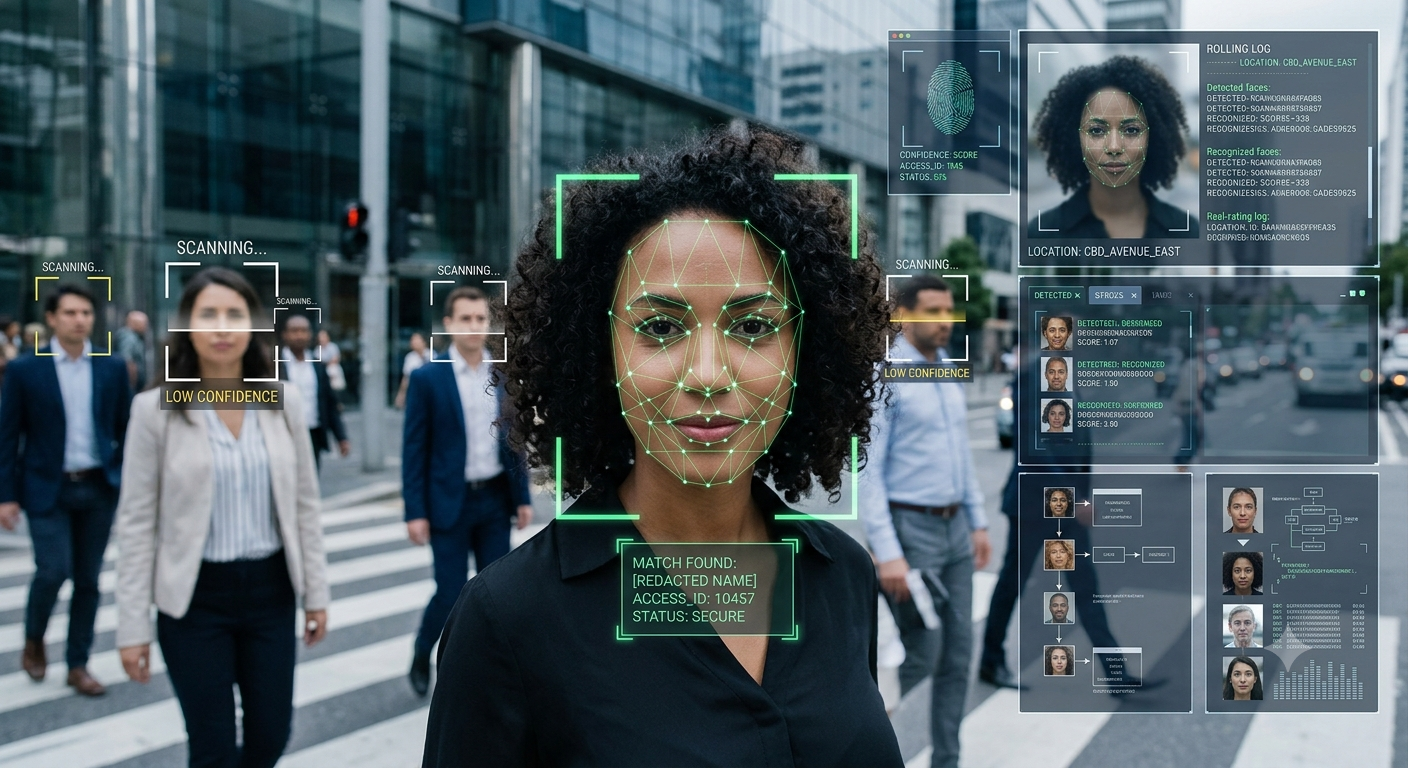
In movies, a camera spots someone in a crowd and instantly pulls up their full identity, criminal history, and childhood photos. In The Dark Knight (2008), Batman turns every phone in Gotham into a real‑time facial recognition grid. Not to mention, Fast & Furious 7 features “God’s Eye,” which finds anyone on Earth in seconds using every camera on the planet.
Reality:
Real‑world facial recognition requires proper angles, lighting, and quality. It doesn’t instantly know everything about everyone — it compares a face to a database you actually have access to.
What Secure Planet™ Actually Does:
Secure Planet™’s FRaD (Facial Recognition at a Distance) can identify faces up to 300 meters away — but only against authorized watchlists. Meanwhile, BioCore® performs biometric enrollment and search across face, fingerprint, SMT, and LPR data, and can send biometrics directly to government databases when appropriate. It’s fast, accurate, and mission‑ready — but grounded in reality, not movie magic.
4. Biometric Myth: All Biometric Systems Are One‑Size‑Fits‑All
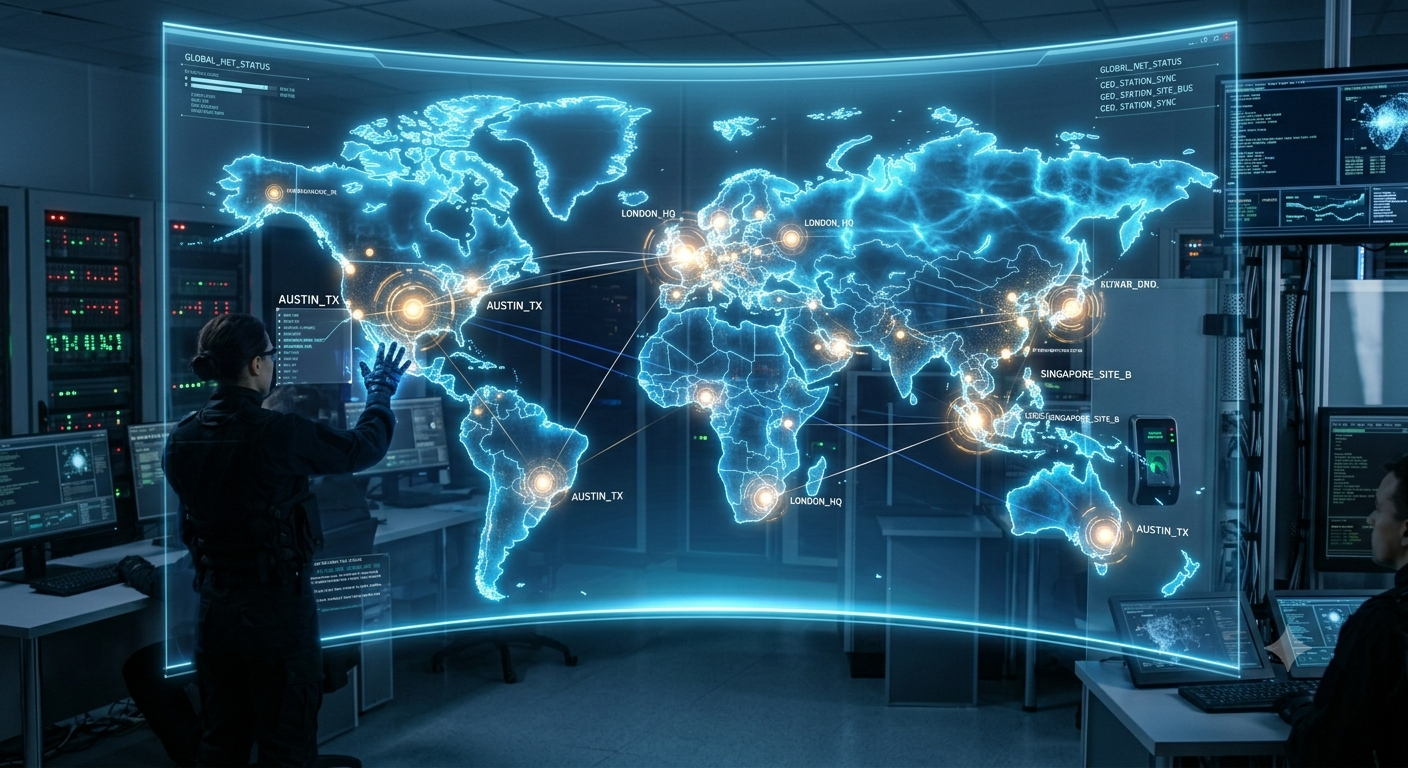
Films often show a single, monolithic system that every agency magically uses. The Bourne Ultimatum shows CIA analysts pull up global biometric data in seconds from a single interface.
Reality:
In the real world, agencies use different tools, standards, and workflows — and interoperability is a major challenge.
What Secure Planet™ Actually Does:
BioCore® is built to adapt. It features a tailorable graphical user interface, customizable workflows, and flexible deployments across Windows, Linux, and Docker. It also supports EBTS, MatchML, and WatchML — the real standards that make inter‑agency data sharing possible.
And yes, BioCore® can send alerts directly to TAK (Team Awareness Kit), something Hollywood never shows but real operators rely on.
5. Biometric Myth: AI Always Knows Who the “Bad Guy” Is
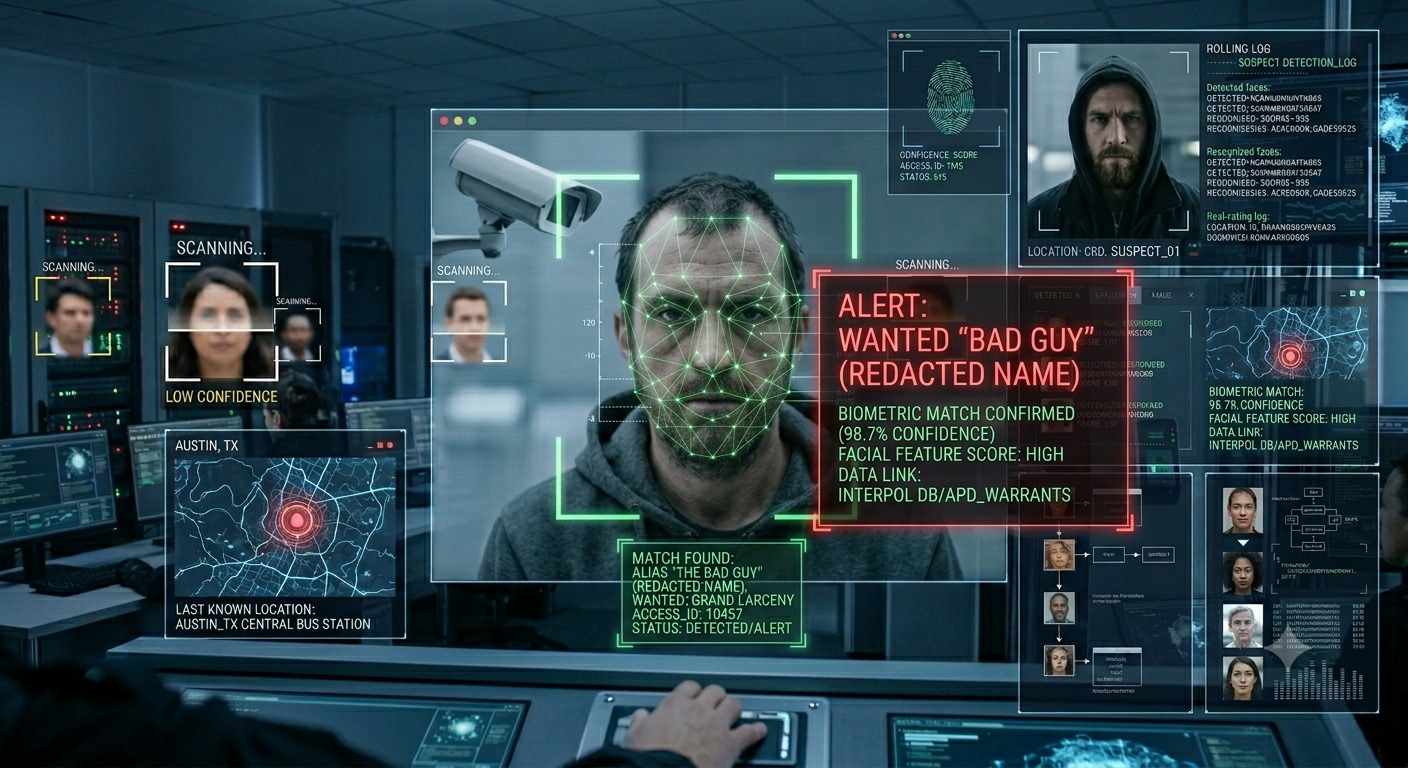
Movies portray AI as omniscient — instantly identifying threats with dramatic red boxes around villains. Like in Terminator 2, the T‑800 instantly identifies threats with a HUD overlay.
Reality:
AI doesn’t know who’s “good” or “bad.” It detects patterns, objects, and matches — not morality.
What Secure Planet™ Actually Does:
Secure Planet™ systems provide threat detection and video analytics, including object detection, gun detection, and license plate recognition. But the intelligence comes from trained operators and analysts — not from an AI that magically knows the plot twist.
The Truth: Real Biometrics Are Smarter, Safer, and More Mission‑Ready Than Hollywood Shows
While Hollywood exaggerates for entertainment, the real technology powering today’s law enforcement, military, and border‑security missions is far more sophisticated — and far more grounded in reality, not biometric myths.
Secure Planet™’s ecosystem — BioCore®, FABIS Mobile, FABIS Multimodal, and FRaD — delivers:
- Multimodal biometrics and video analytics in one system
- Enrollment and search across face, fingerprint, SMT, and LPR
- Real‑time object detection and AI video intelligence
- Direct submissions to government databases
- TAK alerting for field teams
- Standards‑compliant interoperability
- Customizable workflows and interfaces
No movie magic. Just mission‑ready technology built for the real world.
